Why I'm Leaving Tiny Habits
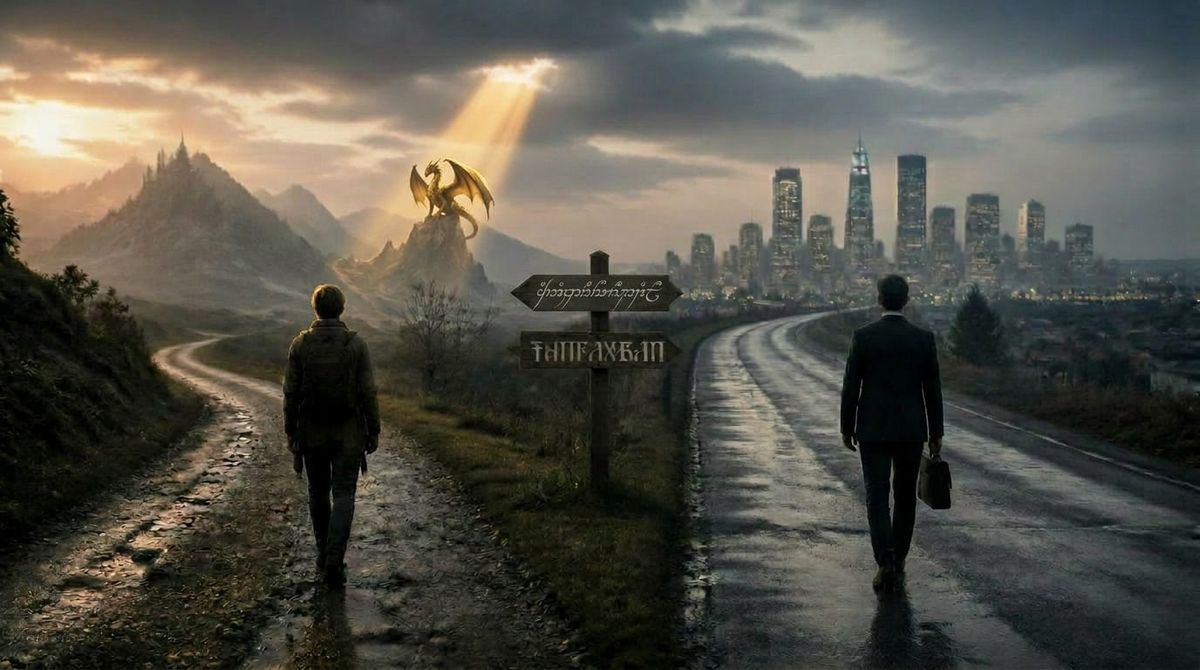
About two years ago, I became a certified Tiny Habits coach. I've recently decided to leave that behind. Here's what that decision is all about:
A few months ago, I recorded a podcast with Linda Fogg-Phillips, who runs the Tiny Habits Academy and its coaching program. I expected the episode would be up within a week or two. It still hasn't aired. I'm not going to speculate about why — I know Linda and BJ Fogg, her brother and the creator Tiny Habits, have both been dealing with some personal tragedy, and I don't want anything I say here to read like a grudge. There is absolutely no grudge. I deeply respect BJ Fogg's work, and Linda is a fantastic person. The office hours and the time I had getting to know each of them over the past couple of years have been a gift.
The complication is that if and when the podcast does air, anyone listening will hear me speaking warmly about Tiny Habits — and then come to my website and wonder why it's nowhere to be found. So I owe an explanation to you, the unknown podcast listener.
I came to Tiny Habits from Narrative Coaching, not the other way around.
In Narrative Coaching there's a concept called the pivot — a point in someone's development where an old pattern has to give way to a new one if they're going to become who they're trying to become. When I came across the pivot, I recognized echoes of something I'd already read and admired: BJ Fogg's Tiny Habits. The vocabulary was different, but the bones felt familiar. So I went through the Tiny Habits coursework, became a coach by email for people in the free online program for a while, and earned the certification. All in the name of helping my Narrative Coaching clients approach those pivots with confidence.
Once certified, I added Tiny Habits to my website. I thought the brand recognition might help bring people in, and that some of them would eventually find their way into the deeper Narrative work I love to do. I even offered Tiny Habits as a loss leader — free sessions for groups as an inroad for organizations that might later hire me for the "harder work."
In two years, no one ever took me up on it.
Some of that is on me. I really just don't like marketing. And especially while I was still working full-time in corporate America, I didn't have a financial need to give it everything I should have. Fair enough. But two other things are now coming into play.
The first is that there is already a free Tiny Habits program. You go to the site and BJ walks you through every principle himself — anchor moments, recipes, celebrations, all of it.
It's hard to compete with free, and it's especially hard when "free" is coming from the person who built the system in the first place.
The second is (brace yourselves) AI.
Tiny Habits is, at heart, a process. BJ lays it out very clearly — a graph of ability versus motivation, a prompt that potentially triggers an action, all creating a recipe with an anchor, a simple action, and a celebration. Sure, the action line on the graph will vary from person to person, but the structure is a formula. And that formula is mostly tactical. It lives at the planning level.
AI loves tactical things.
Right now, you can go to almost any major LLM, tell it to act as a Tiny Habits coach, describe what you're trying to change, and it will give you serviceable recipes and refine them as you feed it more information day to day. It will probably do about as good a job as a coach whose role was exclusively on the Tiny Habits piece.
All of this is true. It's also less important than what I've come to believe.
Here's a story from my own life.
For years, every night on the way home, I'd hit a particular intersection. Turn right and I eventually end up in my driveway. Turn left and I eventually end up at a convenience store. For longer than I want to admit, left was the default — because the convenience store meant a root beer and a cookie as a reward for the day.
I tried to break the habit using Tiny Habits. The anchor was obvious: pulling up to the intersection. The new behavior was simple: turn right. So I'd turn right, pat myself on the back (celebrate!), end up in my driveway, sit in the car for a moment, decide I really did want the cookie and the root beer, and back out and drive over.
I tried adding another step: Get into the house. I'd go inside, sit down at my desk or in the easy chair, wait a few minutes, and decide — again — that I really did want that root beer and cookie. And off I'd go.
BJ talks about this in the book. The principle is that Tiny Habits work best when they help people do the things they already want to do.
That's true as far as it goes. But people aren't that simple. We rarely want just one thing. We want many things, and they're often in conflict. And when wants are in conflict, a tactical formula can't reach the disagreement underneath. It can only enforce one side of it.
That's where the Narrative work I actually do lives.
We are meaning-making creatures. We tell ourselves stories because stories are how we make sense of the world — including our own behavior, our own choices, and the way other people respond to us.
In my case, I had to look at the story I was telling myself about why I deserved the root beer and the cookie. The competing values weren't the unlock. What ended up shifting it was a metaphor — a particular visual I built around the idea of deserving it. Once I had the metaphor, tweaking it only a little changed the visual quite a lot. The new picture I could hold in my mind made it plain that turning left opened yet another sluice gate in the ongoing flood of sugars and fats that ended each day, and that was actually a choice to do harm to myself.
That sounds obvious laid out flat like this. But the metaphor was what made it land. So when I'd pull up to the intersection, the new visual was already there, and the story I was telling myself was: turning left does damage.
It took four days of holding that visual as I approached the intersection – four days! – and turning right became the easy choice. The habit was broken.
There's a line on the home page of my website stating that "Intention Forge is human first."
That isn't decoration. It's how I see the world.
At the core of it, humans are complex, and we all carry these astonishing stories that are uniquely ours that help us make sense of the world.
Working with someone's story isn't as easy as a formula. It isn't as easy as a process you can just plug into. Sometimes I wish it were. But if it were — if we were some kind of mechanical meat machine that just took inputs and produced outputs — we'd lose most of what makes it worth the time to really get to know each other. Our stories wouldn't matter.
The stories we tell ourselves are amazing. I love hearing them.
And that's where the work I want to do actually lives.
P.S. – if anyone wonders what John Lennon's son is up-to these days, here's a tangent to today's article: